
Crucial Aftercare Protocols to Prevent Rebound Pigmentation
Undergoing advanced clinical laser therapies is one of the most effective ways to break down stubborn dermal dark patches. However, hitting the pigment clusters with medical energy is only 50% of the battle. The remaining 50% relies entirely on your daily habits at home immediately after your session.
Because melasma-prone skin possesses hyper-reactive melanocytes, failing to practice strict post-laser care can inadvertently trigger thermal stress, leading to a frustrating complication known as post-inflammatory hyperpigmentation (PIH), or “pigmentation rebound.”
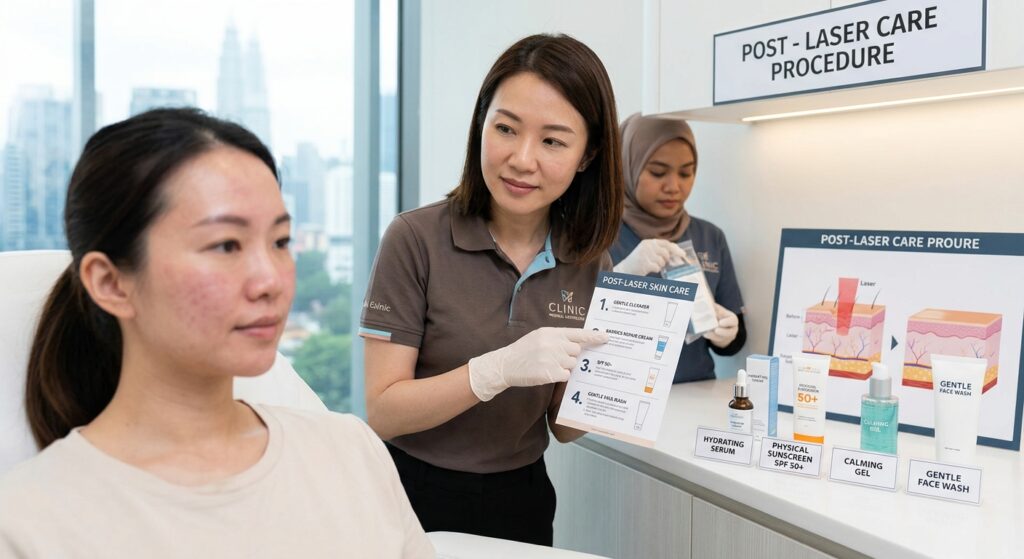
Immediately following your session, your skin matrix will experience mild erythema (redness) and a subtle sunburnt sensation. During this fragile phase, your absolute priority is to lower the skin’s baseline temperature and reconstruct the epidermal barrier.
Keep Your Skincare Ultra-Gentle
UV radiation is the primary trigger that wakes up sleeping pigment cells. Newly lasered skin has a temporarily thinned stratum corneum, making it twice as vulnerable to sun damage.
You must apply a broad-spectrum, physical (mineral-based) sunscreen with an SPF rating of 50+ or higher every single morning, even if you are staying indoors. If you are stepping out under the Malaysian sun, reapply your sunscreen every 2 hours and wear a wide-brimmed hat or use a UV-blocking umbrella.
To view the complete spectrum of advanced modalities that can be safely combined with targeted skincare—such as Pico lasers, PDRN, and cellular repair serums—explore our definitive guide on clinical
@draidilidealyst Cara Express atasi masalah kulit kusam & pigmentasi untuk Kulit Sensitif 💟 #aestheticclinic #aestheticdoctor #doktorestetik #fyp #laserkulit #kulitkusam @Idealyst Clinic Official ♬ Relax, Take It Easy - HVSH & ZHIKO
If you underwent a non-ablative laser treatment, you can generally apply light, breathable mineral makeup 24 hours after the procedure. Avoid heavy, oil-based foundations that require aggressive rubbing to remove.
Absolutely not. Mild flaking is a positive sign that dead, pigmented skin cells are shedding off. Let them fall away naturally; peeling or scratching them off prematurely will cause scarring and dark marks.